
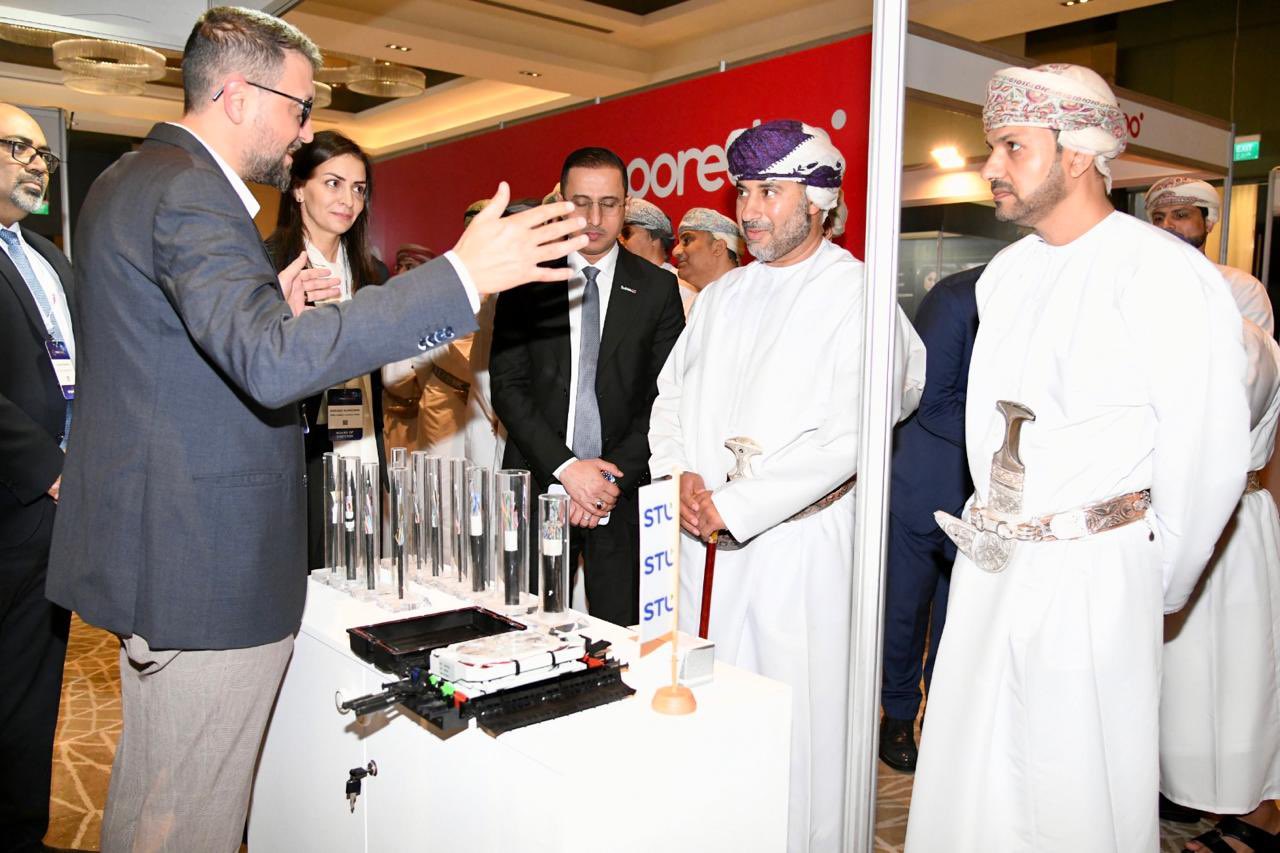
The Sultanate of Oman recently hosted the 15th Annual Conference and Exhibition of the Fiber to the Home (FTTH) Council Middle East and North Africa (MENA).
The event attracted over 270 industry leaders, policymakers, and technical experts. Participants engaged in comprehensive discussions regarding the latest innovations in optical fiber, its integration with Artificial Intelligence (AI) technologies, and its vital role in accelerating digital transformation.
Organized by the FTTH Council MENA in partnership with Oman Broadband Company as the host entity, the conference was held under the auspices of His Highness Sayyid Dr. Adham bin Turki Al Said. During the event, His Highness emphasized that the conference reinforces national efforts aimed at developing digital infrastructure and highlights the pivotal role optical fiber networks play in enabling digital transformation.
On his part, Ahmed Al-Hassani, Member of the Board of Commissioners at the Iraqi Communications and Media Commission, underscored the importance of regional cooperation. He noted that the cross-border nature of AI infrastructure requires coordinated regulatory frameworks and joint efforts to establish standards that facilitate seamless integration while safeguarding national interests.
Commenting on the event, Eng. Sultan bin Ahmed Al Wahaibi, Chief Executive Officer of Oman Broadband Company, stated that the company’s participation as a supporting partner stems from its position as the leading national company driving the implementation of strategic plans for Oman’s digital infrastructure.
In turn, Dr. Alaa Mousa, President of the FTTH Council MENA and CEO of Earthlink Iraq, highlighted that while advanced economies continue to consolidate their positions as global digital hubs, emerging markets are rapidly accelerating investments in optical fiber infrastructure. He emphasized that this infrastructure serves as a fundamental pillar for enabling e-learning, telehealth services, and the expansion of flexible working opportunities.